
 In honor of Shale Gas Outrage II, I have taken the liberty of posting a redrafted and much improved (I hope!) version of a longer, more scholarly piece I drafted earlier this year called “The Good American.”
These are the opening paragraphs.
The full paper can be found here:
http://philosleft.blogspot.com/2012/09/the-corporatization-of-american.html
Of all the potential crises that threaten to undermine the grand experiment called “American Democracy,” that which poses the greatest and most existential danger to its very conditions is the rise of the “shale play,” that is, the rise of horizontal, slickwater, hydraulic fracturing for shale-bound natural gas. Sponsored by some of the biggest and most morally compromised industries flying the American flag—Exxon, Shell-Mobil, Chesapeake, Halliburton, BP, Chevron—the threat posed to clean water, breathable air, private property, public lands, and community integrity is well-established.
It’s thus no surprise that such corporations—and despite their demonstrable paucity of interest in prioritizing American economic needs—appeal to the patriotic predisposition and sentiment of “the good American” to effectively extort consent.
I live and work in Pennslvania. Making my state attractive to corporations through the guarantee of minimal regulation, access to non-unionized workers, the use of eminent domain, forced pooling, mineral extraction rights, and a pro-fossil fuel state policy agenda very quickly became translated into the patriotic rhetoric of self-sacrifice by any American who wishes to be perceived as a good citizen, the advocate of freedom, the stalwart patriot—the good American. This rhetoric resonates deeply in rural counties and municipalities like mine. Columbia County, PA, where I live twenty-five minutes downstream from a (now seemingly abandoned) frack operation, and another 20 minutes from a fracking-water withdrawal station on Route 11 directly adjacent to the Susquehanna River.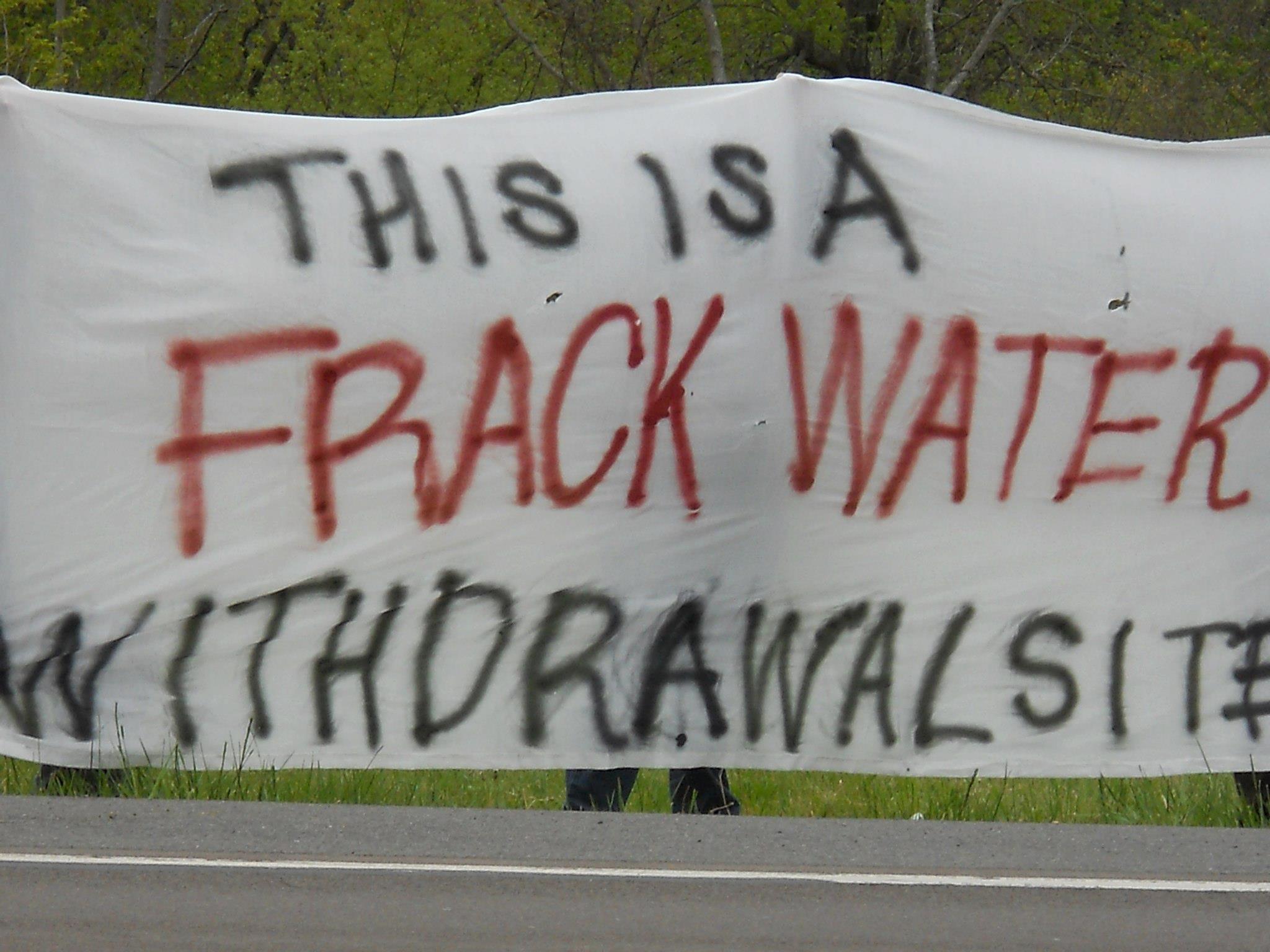
Over the last several years, this process of extraction which requires the generation of a miniature earthquake to release natural gas from shale deposits deep under the ground has begun to attract considerable public attention, both for its offer of well-paying jobs, and because of the dangers of its specific extraction processes, and its many ancillary enterprises, for example, the use of enormous quantities of sand requiring cross- country transport, its use of highly toxic combustible chemical solutions, its permanent removal and contamination of billions of gallons of water, its methane contribution to greenhouse gases, and its need for thousands of compressor stations and miles of leaky transmission lines.
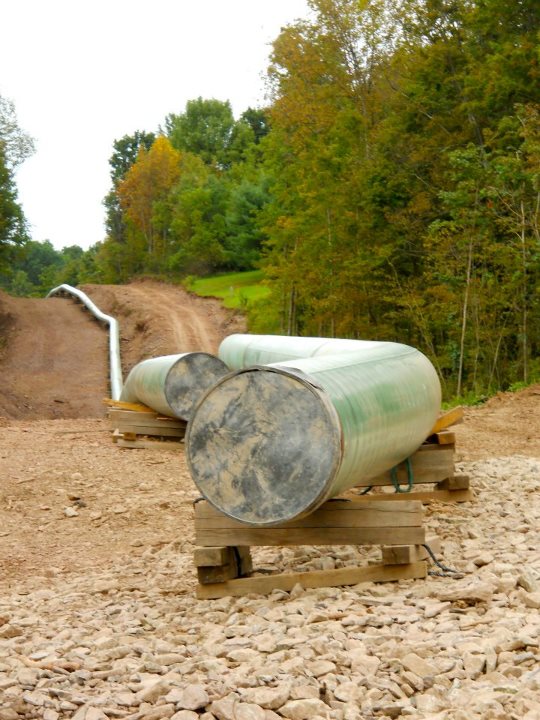
The controvery escalates daily, and sometimes violently. But it’s hardly surprising when the stakes not only for the democracy, but for life, are so high.
Hence it’s also not surprising that the fracking corporations would appeal to that rhetoric most likely to be effective in the effort to quell the resistance to the destruction of the necessary conditions of life—that of the good American who is willing to sacrifice life and limb for his or her country.
The language of “energy independence,” “energy security,” “free enterprise,” “the entrepreneurial spirit” were quickly appropriated by corporations like Chesapeake who promise “Cheap, Abundant, and American” in their advertising and who insist that they can be trusted because, after all, they’re American too. Those who dared to challenge this appeal to patriotism were quickly cast as un-American, anti-capitalist, anti-progress Luddite enemies of the state—an image easily promoted through industry propaganda to further justify the state’s legislative usurpation of the prerogatives and responsibilities of townships and municipalities to regulate “shale play.”
Films like the American Petroleum Institute’s “Truthland” (TruthLand Movie | A project of IPAA and Energy In Depth), and aggressive advertising websites pretending to offer expert testimony and advice like Energy in Depth (Energy In Depth) are saturated in patriotic images and slogans which make clear that fracking is the American way—and that anyone who questions the authority of either state governments who subsidize the industry or the industry itself is ripe for target as, for example, a “socialist,” or “Communist.” Or worse. As reported in Common Dreams March, 2012 (Peaceful Anti-Fracking Activists Pursued by FBI as ‘Eco-Terrorists’ | Common Dreams), anti-fracking activists are increasingly the targets of FBI surveillance (even as reports of “eco-terrorism” are on the decrease), and the use of state and local police to insure industry prerogatives is becoming commonplace (Police Raid Anti-Fracking Encampment in Pennsylvania).
Despite the obvious risks, however, a growing movement of activists, fracktivists demanding not a moratorium but a ban, has begun to take hold in Pennsylvania, galvanized by a first-hand experience and an informed understanding that fracking threatens not only the environment in its aesthetic and recreational dimensions, but the very water, air and soil necessary to life, that it threatens a way of life—especially for rural and semi-rural Americans.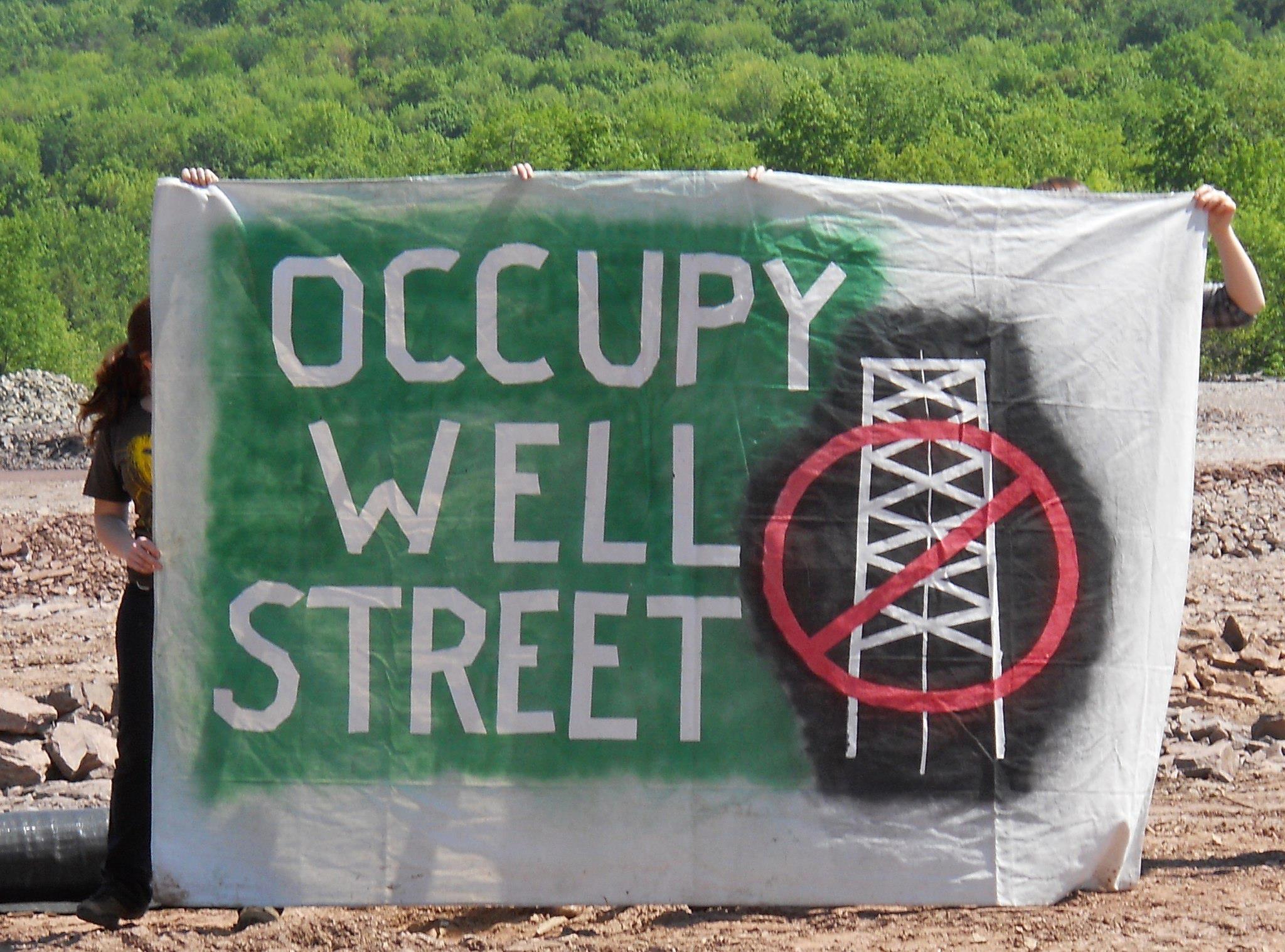
It’s richly ironic that many of these folks would not identify as environmentalists. In fact, notions like “sacrifice for country” are for them powerfully persuasive in light of their rural, military, and working class experience. Nonetheless, as the evidence of the real risks of fracking mounts regarding the safety of the process, the pollutants involved, the damage to community infrastructure, the long-term health effects, and the destruction of hunting lands/fishing waterways, even some of the staunchest of patriots have begun to find themselves at town hall meetings sitting across from Big Energy executives—but not on their sides.
To be clear these risks include at least the following 16 items:
1. The toxicity of the chemicals involved in the fracking process itself, and the veritable certainty that these will migrate eventually along fissures in well-casings into ground water.
2. The necessity of deep injection wells for the permanent disposal of wastewater that is no longer usable by human beings.
3. The actual earthquakes the USGS associates with deep injection wells, and the potential dangerous fissures to well casings caused by a repeating pattern of seismic activity.
4. The already patent environmental destruction, pollution and noise hazards caused by compressor stations, transmission lines, and water withdrawal facilities near public schools, hospitals, and other community assets.
5. The nearly complete absence of regulation in “Class One” rural areas with respect to the construction and monitoring of transmission lines in and out of compressor stations.
6. The destructive consequences for the sensitive ecologies and endangered species of state park and forestlands.
7. The potential extinction of whole species of microorganism—some of which likely remain uncatalogued or even undiscovered—and who make their home in shale deposits.
8. The actual erosion of roads and bridges due to increased heavy truck traffic.
9. The actual emission of diesel and other carcinogens from trucks idling for long periods at frack sites, water withdrawal stations, and compressor stations.
10. The risk of carcinogen exposure to human and nonhuman health from the frack site wastewater deposit pools and from compressor stations.
11. Community conflict destined to erupt between those who lease and those who refuse to lease, some of whom now claim they’ll have to be shot before the state can take their land under the guise of recognizing the lease of mineral rights to energy corporations.
12. The erosion of private property rights by those who would decline a gas lease and who are then subject to compulsory condemnation, forced pooling, and the appeal to eminent domain by the state-all in the interest of allowing the gas corporations to not only frack on such properties, but construct roads, waste pits, and transmission lines in and out of a fracking operation.
13.The effective neutering of municipalities and township boards to govern the infrastructure of their communities under Pennsylvania’s Act 13 which delegates the power to determine the construction of a fracking operation within a municipality to the Sate Attorney general’s Office.
14. The actual use of fracking wastewater as road de-icer in winter despite its carcinogenic properties.
15. The harmful effects of Act 13’s gag order which prevents physicians from releasing vital information to patients exposed to frack fluids in the event of illness. This information includes the composition and amount of chemicals like Benzine, Deisel, naphthalene, toluene and xylene.
16. The potentially hazardous effects for neighboring towns, municipalities, and even states of items 1-
My aims here, however, are not about—at least directly—any of these sixteen items—all of which are well established and publicly available. My claim is that fracking is a concrete, visually compelling epitome of the much bigger crisis of American democracy, namely, the corporatization of state and federal government through, among other tactics, appropriation of the patriotic and thereby manipulative and disarming discourse of the “good American.”
The consequences of this appropriation include not only a fundamental and potentially irrecoverable corruption of the very language and imagery of the public good, but substantial risk to the conditions upon which this good depends—clean water and breathable air. Unlike other current dimensions of the crisis—the collapse of the banks, or the wreckage of the housing markets, for example fracking endangers the conditions of life itself,not only in terms of toxins and other irrecoverable pollutants, but in virtue of (a) the permanent removal of water from rivers, ponds, and lakes, and (b) the concentration of pollutants in the what water remains.
Fracking effectively converts a necessary condition of life into a marketable and unrecyclable commodity, and it’s no real wonder that this demands a propaganda campaign that can either conceal this fact or make sacrifice to it seem worthy and honorable—even a patriotic duty. The cynical appropriation of catch-phrases like “national security” and “standard of living” reveals an industry whose key decision-makers know the dangers of their production processes, and thus know that their “justificatory” rhetoric must include a strategy for neutralizing those who would organize to resist it.
What better strategy than the appropriation of the “good American” against which—especially in the contemporary political climate—those who resist can be cast as “Leftists,” environmental whackos,” “tree-huggers,” “Communists,” or “un-American”? 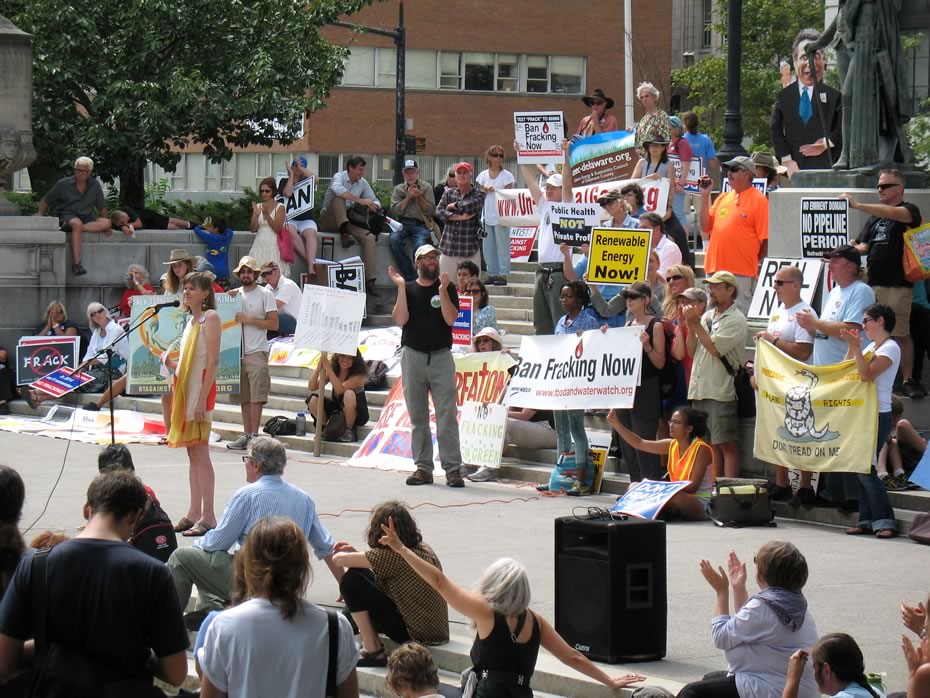
As anti-patriots against whom the police, the National Guard and the Army can be deployed? Traitors to country who can, if necessary, lose their lives for the sake of “national security”? Or at least be arrested and detained, (see, for example, The Evening Sun | Afton anti-fracking activist arrested in Albany).
To continue, please go here:
http://philosleft.blogspot.com/2012/09/the-corporatization-of-american.html


Leave a Reply