No Fracking Way

GASFRAC

Marcellus Wildcatter Bails

September 5, 2013
Marcellus Wildcatter Bails

Carrizo, who drilled a wildcat shale test well in Owego, New York - that leaked - is bailing out of the Marcellus/ Utica. Leaving behind leaking gas wells on both sides of the state line. Some of those shale wells that the frackers said “Never leak. Anywhere. Honest. Ever.” Except when they do, a lot, often, about everywhere. http://www.nofrackingway.us/2013/05/15/dog-bites-man-but-this-time-in-new-york/ Carrizo had an odd way of making a mess of things on both sides of the border. Kind of an Equal Opportunity Disaster waiting to happen: http://www.nofrackingway.us/2013/03/17/carrizo-oil-gas-blowout-spin/ So now they are trying to dump their New York acreage on some Greater Fool. “The Marcellus Shale divestiture primarily includes 2,850 net undeveloped acres in non-core areas of the play and is expected to close in the fourth quarter.” Carrizo Oil & Gas Sells Marcellus […]

Read the full article →

Carrizo Oil & Gas Blowout Spin

March 17, 2013
Carrizo Oil & Gas Blowout Spin

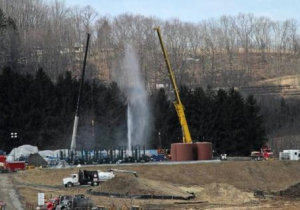
On Wednesday, March 13, 2013, at approximately 6pm the Yarasavage 1H natural gas well began spewing its fracking cocktail. The drillers, Carrizo Oil & Gas were at stage 23 of fracking. Yarasavage 1H natural gas well is located approximately three miles northwest of Tunkhannock in Washington Township along Keiserville Road. (see maps at bottom) The news headlines have characterized the blowout as an “incident”, “faulty”, “spill” and “malfunction”. All very soft words convening a sense of something minor, and not much of concern. The fracking chemicals gushing from the well is described as “salty, chemically treated wastewater”. Three families were evacuated because officials were concerned that as the fluid in the well was released to the surface, gas would blow out behind it. Colleen Connolly, DEP Spokesperson stated that because […]

Read the full article →

Pennsylvania Natural Gas Study – Too Little Too Late for Many

February 19, 2013

I felt there needs to be a bit of a follow-up to my earlier blog post: Fracking Health Study in Pennsylvania. Per Geisinger Leads Marcellus Shale Initiative, Dr Carey stated “To examine issues such as possible health effects will require decades of research.” Between 2003-2005 fracking begins in the Marcellus, Woodford, Fayetteville and Haynesville shale. Since then, there have been numerous health studies by state agencies, public and private organizations. Go and google Natural Gas Health Studies. Texas Sharon at BlueDaze does a good analysis about those breast cancer rates in Texas. In 2009, data from the registry showed that six counties in the western Dallas-Fort Worth area had the highest incidence of invasive breast cancer in the state. These counties are Tarrant (which includes the city of Fort Worth), […]

Read the full article →

On this New Year’s Eve

December 31, 2012

I would like to close this year with a few thoughts for pondering, perhaps they will resonate and carry over into the New Year. I’ve been asked a few times why I connect the dots. Educating people about dangers of fracking and industrialization of our communities is good – but this is the WHAT. We also need to know the WHO.   Who are the corporations? Who are the Executives? Who is on the Board of Directors? Who are the colleges and universities producing reports? Who are the professors/researchers/scientists writing these reports? Who is paying for these reports? Who are the trade groups/organizations? Who is part of the trade groups/organizations? Who is funding the trade groups/organizations? Who are the front groups, the green wash, the Public Relations campaigns? Who is […]

Read the full article →

Introduction to Connecting the Dots

December 24, 2012

The following video presents an introduction to Connecting the Dots of the Marcellus Shale players. Who are these people? Who are the corporations, the lobbyists, the executives, the PR firms, the front groups, the politicians? Click here and Join me in Connecting the Dots. (Vimeo)

Read the full article →

New York’s Fracking Regulations

December 9, 2012

Now is the time to file a response to the proposed fracking regulations directly to the DEC either online or via snail mail and tell them what you really think. They are a comprehensive argument for banning fracking town by town, if not in the state. This may be your last opportunity to comment on how shale gas wells are permitted in New York. If your area does not have a political carve-out in the SGEIS, and if your town or city does not have a land use plan and ordinance that addresses shale gas industrialization, then these drilling regulations will govern where wells are drilled near you - without adequate protections for you, your property or the environment. All you can do then is sue the frackers. Put the DEC on notice […]

Read the full article →

FracUNfocusED

November 30, 2012

Bloomberg news ran this article today: Frack Secrets by Thousands Keep U.S. Clueless on Wells | By Ben Elgin, Benjamin Haas & Phil Kuntz - Nov 30, 2012 Briefly, the article states drilling companies are to disclose the chemicals used in fracking, yet drilling companies did not disclose 1/5th of the chemicals. Why? Drilling companies claim these “non-disclosed” chemicals are trade secrets, proprietary and therefore exempt from disclosure. Excerpt: In August, the largest well-servicing companies that worked in Texas withheld the most information about frack jobs. Wells serviced by Halliburton and Houston-based Baker Hughes Inc., the second- and third-largest oilfield services companies respectively, contained more than nine secrets per well according to reports filed by the companies. Frack jobs by Superior Well Services, the Nabors subsidiary, omitted the most information […]

Read the full article →

Range Resource: Making Problems Go Away

October 24, 2012

One dark and stormy night……………. Well, it wasn’t dark, stormy or at night, but we do have to back track a bit. In Feb 2012, Governor Corbett of Pennsylvania signed ACT 13. Part of the legislation is to collect what is called an “impact fee” from natural gas drillers. Portions of the fee are to be distributed to communities feeling the impact. Another part of ACT 13, which raised the hackles of communities, is the one-size-fracks-all zoning provision, which effectively strips communities of their powers of zoning specifically for the benefit of the natural gas industry. A lawsuit was filed against ACT 13’s zoning provision by the Delaware Riverkeeper Network, Dr. Mehernosh Kahn and seven municipalities. These municipalities include Cecil, Robinson Township, Peters Township and Mt. Pleasant Township in Washington […]

Read the full article →

Natural “full of” Gas

October 5, 2012

In today’s Post-Gazette (Friday, October 05, 2012) a letter to the Editor from Steve Forde, Vice President of the Marcellus Shale Coalition (MSC) appeared. In the letter Mr. Forde took the Post-Gazette to task for publishing a story “Let’s Talk About Art: Photography and the Marcellus Shale Drilling Debate.” Mr. Forde’s letter was headlined as “End Misinformation about Marcellus Drilling”. Mr. Forde’s major objection surrounds the issue of setting water on fire and the presence of fracking chemical in the water as a result of natural gas drilling. He states this “..could not be further from the truth”. He further elaborates (emphasis added): “This baseless claim is perhaps related to Colorado, where a gentleman featured in a widely discredited film ignites his tap water. According to Colorado regulators — […]

Read the full article →

Pennsylvania Legislators Strike GOLD in Shale!

October 3, 2012

Everyone thinks our elected officials are under some influence of “special interest” money. It’s very apparent in Pennsylvania with the passage of Act 13 – The Marcellus Shale in February 2012. The Votes The PA House vote was 101 YEAS, 90 NAYS. The PA Senate vote was 31 YEAS and 19 NAYS. Yes, it was all along party lines. On Feb. 14, 2012, without cameras, reporters or other fanfare – Gov. Tom Corbett quietly signed ACT 13. ACT 13 dangles a little bit of money to each community in the form of an “impact fee” paid by the natural gas corporations. In exchange for 30 pieces of silver, communities will no longer be able to set zoning or other conditions on where or how the natural gas corporations may drill, […]

Read the full article →