


By a fracking mile. So is tourism. Because, unlike fracking, which is tax-exempt in New York, legalized sales of marijuana would reap millions for the state immediately, every month. There is no economic contest here, so far as the state is concerned, legalizing marijuana makes millions, permitting fracking makes the state nothing. It would cost the state in road damage, spill remediation and environmental degradation. No contest on this one. Millions vs nothing.
Marijuana is sustainable, organic and has medicinal benefits. Fracking is not sustainable, wholly inorganic and is hazardous to human health and the environment. Which one will Cuomo permit ?
Legal Hemp Worth More Than Fracking to New York
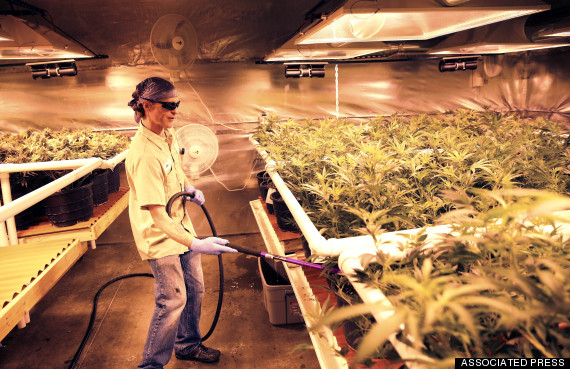
With Colorado and Washington starting to tax and regulate recreational weed sales, and medical marijuana legal in 18 other states, we can finally start to put some hard numbers on the industry’s value.
Numbers like:
$1.53 billion: The amount the national legal marijuana market is worth, according to a Nov. 2013 report from ArcView Market Research, a San Francisco-based investor group focused on the marijuana industry.
$10.2 billion: The estimated amount the national legal marijuana market will be worth in five years, according to that same ArcView report.
$6.17 million: The amount of tax revenue collected in Colorado on legal marijuana sales in just the first two months of 2014.
$98 million: The total tax revenue that Colorado could reap in the fiscal year that begins in July, according to a recent budget proposal from Gov. John Hickenlooper.
$40 million: The amount of marijuana tax revenue Colorado is devoting to public school construction.
7,500-10,000: The estimated number of marijuana industry jobs that currently exist in Colorado, according to Michael Elliott, the Executive Director of the Marijuana Industry Group, a trade association that advocates for responsible marijuana regulation.
$190 million: The amount in taxes and fees legal marijuana is projected to raise for the state of Washington over four years starting in mid-2015, according to the Economic and Revenue Forecast Council, an independent agency that advises the state government on the budget and tax revenue.
$105 million: The estimated annual sales tax revenue generated by medical marijuana dispensaries in California, according to the Marijuana Policy Project, a Washington, D.C.-based group that supports legalization.
$142.19 million: The estimated size of the medical marijuana market in Arizona in 2014, according to the ArcView Market Research report, up from $35.37 million last year. Arizona has a record 80 medical pot dispensaries currently open, with more expected to open this year, according to AZMarijuana.com.
$36 million: The amount of estimated tax revenue Maine would earn every year if it legalized and regulated marijuana, according to a 2013 estimate from the Marijuana Policy Project. Portland, Maine’s largest city, voted to legalize weed in November, and a grassroots campaign to get state legalization on the ballot in 2016 is underway.
$21.5 to $82 million: The amount of estimated tax revenue Rhode Island would earn every year if it legalized and regulated marijuana, according to an April 9 report from the non-profit organization Open Doors. Rhode Island legislators are considering a bill this session that would tax and regulate marijuana like alcohol.
$134.6 million: The amount of estimated tax revenue Maryland would earn every year if it legalized and regulated marijuana, according to a 2014 estimate from the Maryland Department of Legislative Services. Maryland Gov. Martin O’Malleysigned a law legalizing medical marijuana on April 14, and state lawmakers are considering a bill this session to legalize weed for recreational purposes, too.
$17.4 billion: The estimated total amount that marijuana prohibition costs state and federal governments every year, according to a 2010 study by Harvard University economist Jeffrey Miron.
{ 3 comments… read them below or add one }
I think of hemp as the plant cultivar without much TCH..it is used for clothing, fiber, insulation, food..and while the same species is grown for medical and spiritual and recreational purposes, different strains have various amounts of the TCH..and even different strains have different sorts of medical compounds. Hemp, not grown even for the medical etc purposes, is a much needed crop. It requires no fertilizer or pesticides and fixes a lot of carbon. No wonder our MIC government doesn’t like it. Nor the pharmaceutical industry….Laurie
http://hempethics.weebly.com/industrial-hemp-vs-cannabis.html
Right Laurie. Marijuana (Mary Joan) is Mexican slang for the flower buds of the hemp plant. But yes, hemp grown for fiber is a different variety than hemp grown to produce high THC flower buds (aka Marijuana) for medicinal and recreational use. Growing hemp for fiber and oil would be beneficial for New York, but I was addressing legalized marijuana sales - in stark contrast to the Big Nothing the state gets from a gas production tax - of which there is none.
Laurie Roe mentioned hemp for fiber etc. which I know was not your point, but it was a good point that lead me to think about hemp as fuel.
Hemp is a pretty darn good bio fuel, and while the problems with bio fuels are rife, Hemp is much better than corn, not a food staple first off, easy to cultivate, grows like a weed… It maybe, on the spur of the moment thought here, even be a true transition fuel unlike fracked gas…AND growing hemp (and switch grass for similar uses) adds to the atmosphere making it pretty carbon neutral if used as a combustion fuel.