


I was at a meeting in my local area about the Industrial Liquid Waste Plant proposal. This plant will accept liquid waste from the gaslands surrounding our county and “clean” it to be used for more fracking. (See:Lake Township Toxic Industrial Drilling Waste Presentation 2-19-2014)
As you can imagine, residents who live on and around the proposed site are not happy. This post isn’t about the pros and cons of the plant. This post is about what one gentleman said at the meeting.
Let’s call him Ralph. Ralph stood and proclaimed he isn’t a tree hugger, but did say he owns a home surrounded by few acres of land which is wooded, and he has no intention of doing any type of development because he likes the trees. I guess we can then call him a “tree-liker”?
Ralph doesn’t want the Industrial Liquid Waste Plant in his area.
What Ralph said next got me to thinking. Ralph said he was in favor of the “ALL OF THE ABOVE” approach for the American Energy Plan, with the caveat that he is NOT in favor of Nuclear Energy. This means he is in favor of Oil, Natural Gas, Coal, Wind and Solar.
Each of these has their pros and cons. In accepting “all of the above” one must also accept all that comes from below. Let’s look at his all above except for nuclear view.
Start with the “ABOVE” - Wind and Solar.
Wind power does create electricity and does create jobs through the manufacturing, installation and maintenance of the wind turbines. The downside is the “centralized” grid approach where there would be a cluster of turbines and some people find these unsightly. There is also the problem of birds being killed when they fly into the turbines. Cost is not cheap and may be beyond a person’s means. For the electric companies the downside is they are not selling as much electricity, profits drop, the antiquated power grid may not be able to handle the influx of wind created electricity and therefore the grid would need upgrading. To my knowledge there is no waste, and an excess of winds means it’s a breezy day.
Solar power does create electricity, and does create jobs through the manufacturing and installation. Although the cost has dropped considerably, it still may beyond a person’s means. For those who do have solar panels, excess electricity is “sold” to the electric companies. For the electric companies the downside is they are not selling as much electricity, profits drop, the antiquated power grid may not be able to handle the influx of solar electricity and therefore the grid would need upgrading. To my knowledge there is no waste, and an excess of sunlight means it’s a nice day.
FROM BELOW – Coal, Oil, and Natural Gas
Coal is cheap; from the BELOW it pollutes air, land and water; there are cave-ins, explosions, deaths, injuries, health issues, and the problem of what to do with the waste. Proximity of coal mines and processing plants decrease home values, and transport causes its own set of risks and hazards.
Oil is used in many products we use every day in many ways. It does heat homes, used to create electricity, used to manufacture various products and provides jobs. From below it pollutes the air, land and water, there are leaks, spills, explosions, deaths, injuries, health issues and the problem of what to do with the waste. Proximity of oil wells, refineries, related infrastructure, and pipelines decrease property values. Transport overland or through pipelines causes another whole set of risks and hazards.
Along with the methane, Natural Gas has various natural gas liquids such as propane and ethane etc., which are used in many ways in both manufacturing and in homes. Natural Gas itself does heat homes, used to create electricity, and provides jobs. From below it pollutes the air, land and water, there are leaks, spills, explosions, deaths, injuries, heath issues and the problem of what to do with the waste. Proximity of natural gas wells, related midstream infrastructure, and pipelines decrease property values. Transport overland or through pipelines causes another whole set of risks and hazards.
What Ralph is really saying is he wants the benefits from wind, solar, coal, oil and natural gas, but doesn’t want the Industrial Waste in his back yard, he would prefer the industrial waste to be in somebody else’s back yard.
It’s not all that different than Rex Tillerson, CEO of Exxon-Mobil, joining a lawsuit to stop a water tower from being built. The tower would provide water to nearby natural gas drilling operations, and Rex is concerned that the tower is “unsightly” and there would be a substantial increase in truck traffic.
I’m not sure about other states, but here in Pennsylvania, when concerns that a compressor station or glycol dehydration station or even an industrial liquid waste will be “unsightly”, the industry paints the building green, and plants shrubbery and trees around it.
Unsightly water towers, trucks, industrial waste, among other things are part and parcel of the oil and gas industry. If you accept these as energy sources, then you have to accept the unsightly garbage too.
Ralph likes his trees and shouldn’t worry about the industrial liquid waste plant, I’m sure the corporation building it will paint it green and plant trees around it.
©2014 by Dory Hippauf



{ 3 comments… read them below or add one }
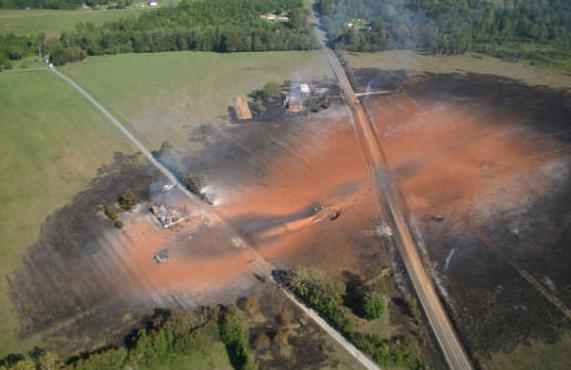
Nice picture Dory…the only pipeline explosion that the NTSB can’t explain.
Oh well.
Two thoughts:
1) A huge con for fossil fuels is that their contributions to greenhouse gases are causing global climate change-this alone is reason enough to wean ourselves off fossil fuels ASAP.
2) When we say that fossil fuels are cheap, we have to be careful that we are including all of their costs-including the costs of trying to clean up local pollution, the costs of pollution-related illness, the costs of trying to rebuild areas where global-climate-change-related weather events have proved devastating, and so on. We are paying these costs already-it’s just that they are not on the actual bills for the coal/oil/gas.
Come to western Canada, where in Alberta and British Columbia, the glaciers in the Rocky Mountain range and surrounding ranges are dissappearing at an alarming rate. If anyone doubts this, they should take a drive down the Icefelds Parkway between Jasper and Banff and view the Columbia Icefields. They have markers indicating the recession.
Here’s one near Jasper at the Athabasca Glacier Centre indicating this. So if people don’t believe the world is heating up, take a trip to the mountains, I’m sure a similar result can be found in many locations throughout North America
Paste the following URL in your browser to see.
http://cdn.c.photoshelter.com/img-get/I0000.3ijSOxPfVo/s/710/receding-glacier-columbia-5747.jpg