



Many of you might have seen the headlines, and soon to be Energy-in-Depth infomercial/talking point regarding CO2 (carbon dioxide) levels.
Decline in CO2 surprises science
Experts cite power plants’ switch from coal to natural gas as a driving factor.
I read the article beyond the hyperventilating headline, and have a few questions.
The article stated CO2 levels dropped for FIRST 4 MONTHS OF THIS YEAR. January-April were also part an extremely warm winter The Natural Gas industry have attributed the rapid drop of natural gas prices, the natural gas glut, and their own financial woes on the warm winter.
If we had a normal winter or colder winter - would CO2 levels dropped? A normal or colder than normal winter would have resulted as an increase in demand for Natural Gas by power plants and homeowners.
We are now having record-breaking HEAT all over the country - which means more electrical usage for Air Conditioning, and power plants would be using more fuel to meet the demand.
Assume for a moment, that the “driving factor” is the switch from coal to natural gas, and then when May-August report is released CO2 levels should show a similar drop.
LITTLE NOTICED TECHNICAL REPORT (LNTR) - why was little notice given to it? Is it because responsible scientists realized it only covered 4 months of data and would require longer study to determine it’s significance or lack thereof?
And where is the LNTR? Googling the news, I found well over 300 articles with variations of the same “surprise scientist” headline. Clicking on a few of them in search of a link to the LNTR turned up empty. The articles I did look at were either reprints of the original AP version, or “spruced up” for their publication. None contained a link to the LNTR.
Not deterred, I went to the U.S. Energy Information Agency, a part of the Energy Department website and ran a search. (Must I do all the work for “journalists”?) Hooray – I found it.
One page report entitled: U.S. energy-related CO2 emissions in early 2012 lowest since 1992
The first graph on the report does show that, yes, emissions are lower for Jan-Apr. Do you feel a “however” coming?
Per LNTR: (emphasis added)
However, CO2 emissions during January-March 2012 were low due to a combination of three factors:
- A mild winter that reduced household heating demand and therefore energy use
- A decline in coal-fired electricity generation, due largely to historically low natural gas prices
- Reduced gasoline demand
CO2 emissions from coal were down 18% to 387 million metric tons in the January-March 2012 period. That was the lowest-first quarter CO2 emissions from coal since 1983 and the lowest for any quarter since April-June 1986. The decline in coal-related emissions is due mainly to utilities using less coal for electricity generation as they burned more low-priced natural gas.
CO2 emissions from natural gas were also down in the first quarter of 2012 compared to a year ago, natural gas-related CO2 emissions fell less (2.8%) than coal-related CO2 emissions, to about 391 million metric tons. While generators used more natural gas for electricity generation, overall CO2 emissions from natural gas were down because of lower gas heating demand this winter when temperatures were significantly above the historical average for the season.
So, what does the LNTR mean? Good news for a 4 month period in that CO2 did go down, but is it indicative of what the next 4 month period, and the next after that will be? No.
Pay attention to 2 key items in the LNTR – WINTER TEMPERATURES SIGNIFICANTLY ABOVE HISTORICAL AVERAGES, and HISTORICALLY LOW NATURAL GAS PRICES.
There is no guarantee winter temps will be above historical averages, nor is there any guarantee natural gas prices will remain historically low.
On the infomercial angle – it did not take Energy-in-Depth long to link to the AP news article. I expect a blog screed by EID will be posted soon. (I can hardly wait.)
EID’s link did give me a chuckle. If you remember, according to the Marcellus Drilling News (MDN), “drilling opponents” have taken over the AP.
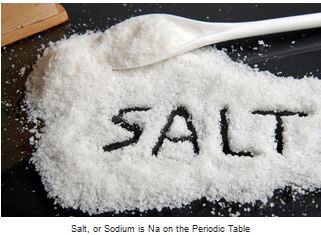
Take the CO2 report with a little Na.






{ 9 comments… read them below or add one }
Here is the short letter to the editor of the Ithaca Journal that I submitted this morning:
“ CO2 emissions in US drop to 20-year low” (Ithaca Journal, Aug. 17) omits any mention of the contribution of methane gas to global warming.
Methane gas is the principal constituent of natural gas. It’s global warming potential is 21 times that of CO2 over a 100-year period and 56 times over a 20-year period according to the United Nations Framework Convention on Climate Change. We need to control methane emissions now, not in one hundred years, if we are at all serious not to cross the tipping point in regard to global climate change.
Kevin Begos’ gas-industry friendly article spins the Energy Information Report in a manner that is embarrassing and a disservice to the public.
“It is difficult to draw conclusions from one year of data” the report concludes. “Just as 2009 was an atypical year in terms of the magnitude of the emissions decline, and 2010 did not signal a new trend in emissions growth, there are specific circumstances (for example, the large increase in hydropower generation) that contributed to the decline in emissions in 2011.”
if you look at the graphs on the report - you will notice the DECLINE in C02 from coal is nearly equal to the INCREASE of CO2 from natural gas… funny, huh?
Wow. I didn’t see that. What a sell out organization AP has become, regrettably. Seems that the comment sharing is working. Yea!
I doubt the AP even saw the actual report, let alone read it as they did not include a link to it in the article. I had to go googling to find it.
Report link: http://www.eia.gov/todayinenergy/detail.cfm?id=7350
If you go to the graph(s) near the end of “report”, click on tabs to change fuel source
Coal CO2 decreased to just below 400 million metric tons
Natural gas CO2 increased to just below 400 million metric tons
since coal decrease and nat gas increase are about equal, over “decrease” is probably due to warm winter, less fuel used than to a switch in fuel sources
I don’t think we can say the entire AP is a sellout but we can certainly look at anything Begos writes with skepticism. This is not the first sensationalistic, industry friendly piece for him.
Nice job on the letter, Cris. Hopefully they will print it.
Did you see the first AP article on Julian Assange at the Ecuadorean embassy in London? That was a clear case of the story trying to lead the facts. Then, once it became clear the Britain’s threats were all bluff, the next AP article takes a completely different stance. Yes, there are some good journalists with AP. But there are a lot who are sellouts or just plain gullible, or who spin the news in a way they think will play well.
pros·ti·tu·tion/ˌprästəˈt(y)o͞oSHən/
Noun:
The practice or occupation of engaging in sex with someone for payment.
The corrupt use of one’s talents for personal or financial gain.
{ 1 trackback }