
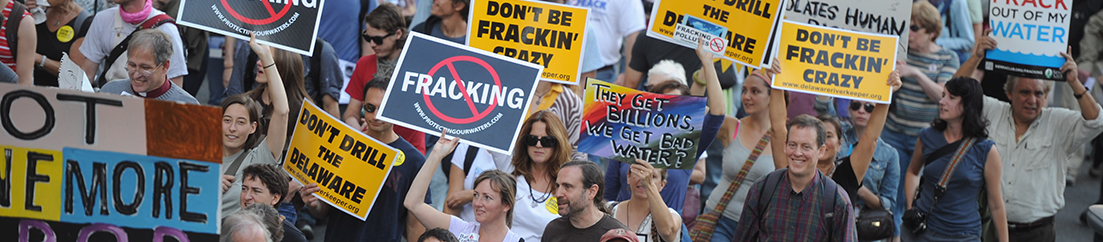


http://online.wsj.com/article/SB10001424052702304070304577396391732954530.html?mod=googlenews_wsj
This fracking crock of flowback is imploding faster than I can type . . .
http://www.pressconnects.com/apps/pbcs.dll/article?AID=/201205021414/BUSINESS/120502032
As if we didn’t know it was a scam . . .
http://energypolicyforum.com/?p=401
As if some of us didn’t know all this 4 years ago
Update - Aubrey McFrackin is out as Chairman, freeing up his ability to go back to doing what he does best: scam landowners
http://m.yahoo.com/w/news_america/chesapeake-says-replace-mcclendon-chairman-131252596-finance.html?orig_host_hdr=news.yahoo.com&.intl=us&.lang=en-us
If you squint your eyes, this fracking gas hole looks kinda like Bernie Madoff
http://www.reuters.com/article/2012/05/02/us-chesapeake-mcclendon-hedge-idUSBRE8410GG20120502
NEW YORK (Reuters) - As chairman and CEO of Chesapeake Energy Corp, Aubrey McClendon has been a powerhouse in the vast U.S. natural gas market, directing the company’s multibillion dollar energy-trading operation and setting output targets for America’s second-largest producer.
Behind the scenes, a Reuters investigation has found, McClendon also ran a lucrative business on the side: a $200 million hedge fund that traded in the same commodities Chesapeake produces.
On Tuesday, two weeks after Reuters reported that McClendon has taken up to $1.1 billion in loans against his stakes in Chesapeake oil and gas wells, the company stripped McClendon of the chairmanship and reiterated that it’s reviewing details of the loans. A statement quoted McClendon, who will stay on as CEO, saying that the move will enable him to focus his “full time and attention on execution of the company’s strategy.”
But for at least four years, from 2004 to 2008, McClendon’s attention extended well beyond his job at Chesapeake ,,,,,
http://www.reuters.com/article/2012/05/02/us-chesapeake-mcclendon-hedge-idUSBRE8410GG20120502
First the scammy leases, then the wild asset sales to frantically try to pay down debt , then the jinxy farm-outs to the Chinese. . .
Then Reuters blows the whistle on the melt down, then Rolling Stone, then Forbes, WSJ, IRS, SEC, diNapoli. . .
Probably too late to short the fracking train wreck known as Chesapeake Energy
http://www.bloomberg.com/news/2012-04-27/chesapeake-s-outlook-dims-as-board-switches-course-on-ceo-loans.html
All because that shale $cam known as Aubrey McFrackden thought it was easier to frack shareholders than shale
http://www.reuters.com/article/2012/04/26/us-chesapeake-idUSBRE83P0PX20120426
Deborah Rogers called this scam out three years ago - before anyone was paying attention:
http://www.scribd.com/doc/88281876/The-Shale-Game-Frackonomics-5-0
I did a Power Point on how shale $cams worked 2 years ago . . .
http://my.brainshark.com/Ponzi-Gas-Frackers-8298212
Hot tip to NGO sell-outs, crooked politicians and shale $hills : cash McPonzi’s check before it bounces.
And pretend the uber-fracker is not a total fracking gas hole:
http://my.brainshark.com/Fracking-Carrots-and-Sticks-425491941
Aubrey McFrackin, the man who made fracking a four letter word:
SEC starts probe of Chesapeake CEO’s well stakes
Related News
- Chesapeake Wyoming well response delayed by weather
Thu, Apr 26 2012
- Firm that made loans to Chesapeake CEO defends them
Thu, Apr 26 2012


By Ernest Scheyder and Brian Grow
NEW YORK | Thu Apr 26, 2012 7:44pm EDT
(Reuters) - The Securities and Exchange Commission has opened an informal inquiry into Chesapeake Energy Corp’s controversial program that granted Chief Executive Aubrey McClendon a share in each of the natural gas producer’s wells, a source familiar with the matter said on Thursday.
That inquiry, being led by the SEC’s office in Fort Worth, Texas, comes after Reuters reported about loans McClendon had obtained on those wells that raised concerns about a potential conflict of interest by the company’s CEO.
Chesapeake said it would end the program that gives McClendon a 2.5 percent stake in every one of the company’s thousands of wells in 2015, when the shareholder approval of the program that started in 2005 expires.
The company said in a statement earlier on Thursday that its directors had never reviewed or approved McClendon’s mortgages on stakes in those wells, reversing its prior assertions that its board of directors was “fully aware” of McClendon’s financing transactions around the well ownership stakes.
“The board of directors did not review, approve or have knowledge of the specific transactions engaged in by Mr. McClendon or the terms of those transactions,” the company said.
Ratings agency Standard & Poor’s said on Thursday the turmoil surrounding the well ownership program and McClendon’s personal transactions could hamper the company’s ability to meet “massive external funding requirements stemming from its currently weak operating cash flow.”
S&P lowered its credit rating for Chesapeake - which has been junk grade for some time - one notch to “BB” from “BB-plus” and said another cut could occur within a few months.
Chesapeake shares ended Thursday down 3.1 percent at $17.56 on the New York Stock Exchange, bringing the decline so far this year to about 20 percent.
The company’s recently issued 6.775 percent note due March 15, 2019, the most active issue on Thursday, was down 0.5 to 0.75 point following the S&P downgrade, according to traders.
Reuters reported on April 18 that McClendon, who founded the company, had borrowed as much as $1.1 billion in the last three years against his ownership stakes in wells that he received under the company’s “Founder Well Participation Program.”
The majority of the borrowing came from an investment management firm that is also a major financier of Chesapeake itself.
On Thursday, McClendon disclosed that as of the end of 2011, he owed $846 million on loans taken out against his well stakes. But the company did not disclose the total amount McClendon has borrowed, or whether his outstanding debt has risen since the end of last year.
The loans had been previously undisclosed to shareholders, analysts and academics said, raising concerns that McClendon’s personal financial deals could compromise his fiduciary duty to Chesapeake.
An informal inquiry is the first step taken by the SEC before it launches any full investigation into potential wrongdoing by a company.
One major shareholder questioned whether the company’s new statements had been prompted by the SEC probe.
“It seems somewhat coincidental that the board has acted this way today, and the SEC announces its inquiry. You wonder if they didn’t have the news,” said David Dreman, chairman of Dreman Value Management LLP, which owns about 1 million Chesapeake shares.
‘FULLY’ VS ‘GENERALLY’
Critics of the company have long complained the company’s board acted a little more than a rubber stamp for McClendon, one of the energy industry’s most visible leaders.
McClendon founded Chesapeake in 1989 and quickly built the company into one of the nation’s fastest-growing producers of natural gas. It is now the second-largest U.S. natural gas producer behind Exxon Mobil Corp.
Chesapeake said “the statement last week that ‘the Board of Directors is fully aware of the existence of Mr. McClendon’s financing transactions’ was intended to convey the fact that the Board of Directors is generally aware” that McClendon had used the well ownership stakes as security for the loans.
One analyst said Chesapeake’s new statement did not provide any reassurance that it was addressing the issues.
“How can this make me more comfortable?” said Phil Weiss, an analyst with Argus Research. “Either you’re fully aware, or you’re not. ‘Fully’ and ‘generally’ are two entirely different words.”
Chesapeake board members declined to comment in specific terms on why they reversed course on McClendon’s stakes in the wells and how the company’s general counsel could describe the board as fully aware of the CEO’s related loans if they had “no knowledge” of them as the board said in a statement.
“All of this is a work in progress,” Frank Keating, a Chesapeake board member and former governor of Oklahoma, said in an email.
But an investor said the move was a step in the right direction, and that it showed the company was listening to shareholders’ complaints.
“It’s basic due diligence that sadly wasn’t being done before,” said Jake Dollarhide, chief executive of Longbow Asset Management in Tulsa, Oklahoma, which owns Chesapeake shares. “It shows the free rein that McClendon had.”
McClendon disclosed additional information about his ownership stakes in the wells, and the board is reviewing the CEO’s financing arrangements.
The CEO listed his share of Chesapeake’s proved natural gas reserves at 810 billion cubic feet equivalent, or slightly more than 5 percent of the company’s total. That equates to about 12 days’ supply for the United States based on 2011 consumption.
The Oklahoma City, Oklahoma-based company has been at the leading edge of the shale gas industry and holds vast acreage in the fields discovered in recent years that are expected to yield decades of fuel for the United States.
But the steep jump in natural gas output has sent prices for the fuel plummeting to their lowest level in decade, squeezing profits and pressuring share prices for Chesapeake and many of its peers.
Debt rating firm Fitch Ratings said on Thursday it had revised its outlook to “stable” from “positive” for Chesapeake, which has $13 billion in rated securities, largely because of the low natural gas prices.
(Reporting by Matthew Goldstein, Matt Daily and Jennifer Ablan in New York, Anna Driver in Oklahoma and Brian Grow in Atlanta, writing by Matt Daily, editing by Sofina Mirza-Reid,Bernadette Baum and Tim Dobbyn)
Class Action suit against Chesapeake - for fracking the frack out of their shareholders, who only thought they fracked shale .. .
http://www.marketwatch.com/story/pomerantz-law-firm-has-filed-a-class-action-against-chesapeake-energy-corporation-chk-2012-04-26
Of course, anybody who has been paying attention knew this was a scam since 2008 when Cheney “liberalized” the SEC regs.
http://www.scribd.com/doc/88281876/The-Shale-Game-Frackonomics-5-0
And Aubrey McFrackin discovered it was easier to frack Wall Street than shale
http://my.brainshark.com/Ponzi-Gas-Frackers-8298212
Pomerantz Law Firm Has Filed a Class Action Against Chesapeake Energy Corporation — CHK
http://www.scribd.com/northrup49



{ 2 comments… read them below or add one }
Aubrey McClendon – Natural gasbag, can’t afford to clean out America’s abundance…
aubrey is a real piece of works,and i hope the price of natural gas plummets to below $1.00 as i believe that is the floor on natural gas prices.from there it’s a free fall, and i would love to see how these chesapeake’s of the gas world, and there grand ponzi schemes fair from there.