


We know that gas wells have a nasty habit of venting gas into groundwater.
http://www.scribd.com/doc/65577477/How-Gas-Wells-Leak
This becomes a real problem if you, your pets or your livestock drink from shallow water wells. (It’s also hell on fish. . .) It’s less of problem if your water well is mining water from deep aquifers - that are not exposed to leaking gas wells. In the relatively rare instances where people depend on groundwater wells - methane has sure enough shown up - released from shallow gas formations by gas wells. So the Texas exception - a shallow water well - proves the rule - gets gassed by a gas well. Imagine that. . . . And the homeowner can treat their guests to an exhibition of Josh Fox’s Faucet Flambe. These Flaming Faucets are courtesy of Range Resources - who seem to be vying with Aubrey McClendon for “Most Despised Frackers in America” :
http://shaleshock.org/2012/03/range-resources-makes-a-martyr-of-texas-sharon/
Range Resources - who put the “psycho” in psy-ops :
http://www.cnbc.com/id/45208498
Who pay companies to spy on grass roots opposition - then give presentations about it
http://www.texassharon.com/2012/05/03/are-you-in-the-big-gas-mafias-psyop-database/
And hire 6 attorneys to depose one blogger - which reads like a bag Aggie joke . . .
http://www.texassharon.com/2012/05/04/a-court-hearing-with-range-resources-looks-like-this/
Or write threatening letters to fractavists . . .
https://docs.google.com/open?id=0B0P-oym-MTKzU25fdGhrak1UeDA
http://www.dallasobserver.com/2012-04-26/news/fire-in-the-hole/
How One Man’s Flaming Water Fired Up a Battle Between Texas and the EPA
Steve Lipsky’s epic battle and what it means for the future of fracking.
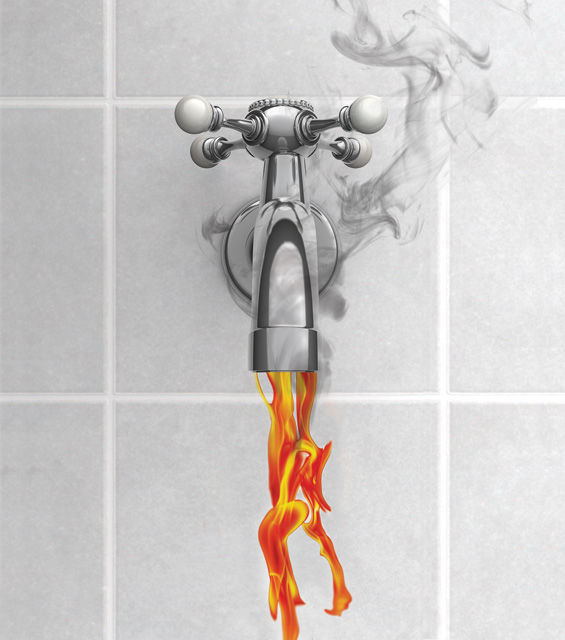
Steve Lipsky gripped a garden hose and held it at arm’s length, staring as a guttering tongue of fire poured from its end and grew another foot before his eyes.
Related Content
- EPA Report Ties Fracking To Groundwater Contamination in Wyoming. But What Does That Mean For Texas?
December 8, 2011
- Clean Electricity Bill Could Be A Bonanza For Shale Barons
March 8, 2012
- Fear and Fracking in Southlake
November 24, 2011
- Fracking Boom a Ponzi-Inflated Bubble About To Pop? Rolling Stone Sure Thinks So.
March 2, 2012
“Look at that,” he said in awe as the flame, liquid and sinuous, licked the rural darkness outside his home in Parker County. “It’s getting bigger. Holy cow! Look at that. We’re up to five feet. That’s not even, what, 25 minutes? We could do this a lot bigger.”
As the fire blazed and was recorded on a video camera during the summer of 2010, water poured from a nearby length of pipe atop the well that once supplied drinking water to his family’s home. Since at least Christmas the year before, Lipsky would testify later, his submersible pump had coughed, sputtered and struggled to fill a 5,000-gallon holding tank with water. He hired a well-service tech to replace the pump, but found a very different problem: natural gas, and lots of it.
For months Lipsky had felt as though something was wrong with him. He was often fatigued and nauseated. In panicked moments, he feared he was dying of cancer. Perhaps this would explain it all — the pump, the tap water that foamed, the flaming hose.
Parker County Fire Marshal Shawn Scott was the first authority to see the fire trick. After blowing off Lipsky as an imaginative crank, in July 2010Scott finally pulled up to Lipsky’s palatial, 15,000-square-foot manse, at the end of a live oak-lined inlet off the Brazos River, just upriver from Lake Granbury.
“Mr. Lipsky turned on the valve at the top of the wellhead and said, ‘Watch this,'” Scott recalls. Water gushed from the wellhead. A few flicks of a lighter, and water and flame poured forth together.
Scott, a good-natured but level-headed hulk, ordered him to snuff it out immediately. Lipsky turned, and the growing flame swept the wellhead, accidentally igniting a second fire. “That got us both a little stirred up there because now we got an uncontrolled flame coming from the top of the water well,” Scott says. “That was the first time I’d ever seen that.”
Scott radioed his assistant fire marshal and told him to bring his tools from downtown Weatherford, a 30-minute drive down two-lane roads. He needed to see just how much gas was coming from Lipsky’s well.
“We got within 20 feet of that well and the hydrocarbon detector was going bonkers, full indication,” Scott says. “I couldn’t get any closer because you risk burning up the sensors. This is in open air. It’s not like we were in a house.”
Instead, Scott used a less sensitive monitor to gauge gas concentrations. “Anything above 5 percent, we start getting nervous. It went to 12 or 14 percent in nothing flat, which is definitely within the explosive range.”
There was little Scott could do. Lipsky had a theory for the source of his gas, and the culprit was beyond Scott’s reach. Lipsky had checked the Texas Railroad Commission’s website and learned that two natural gas wells, drilled horizontally, ran practically beneath his home. “We really can’t touch those guys at all,” Scott says.
So, Lipsky contracted with a consultant out of Flower Mound. Alisa Rich of Wolf Eagle Environmental considered herself a watchdog of the gas production industry. She’s known to cruise the backroads of Denton and Tarrant counties with a camcorder in hand, watching for oilfield spills and leaks, often proclaiming that “the wolf is on the prowl.” Lipsky hired her to test his water alongside an investigator from the Railroad Commission, a powerful regulatory body that oversees the state’s oil and gas industry.
Even before she had finished sampling on August 17, 2010, Rich was worried. Lipsky’s tap water effervesced like Alka-Seltzer. It made her glass sampling containers slippery, as though it had been spiked with lubricant. More than a week later, lab results bolstered her suspicions: His well had been polluted by nearby fracking operations, she believed. Rich advised Lipsky to stop using the water. His wife, Shyla, and their 18-month-old, and 6- and 7-year-old children should stay away, she told him. Gas could be building up inside the house. Lipsky moved into the guest house and stopped using the water. His wife and children extended their routine summer stay with her parents in Graham.
Meanwhile, the results of water quality tests performed by the Railroad Commission came in. They found levels of benzene, a known carcinogen, above the threshold limit for drinking water. Yet the agency did not act, nor did it have an answer yet for the fire Lipsky could ignite. But he and Rich believed they did: It could be no coincidence, they thought, that the two gas wells beneath his home had been fracked just months before Lipsky first noticed his failing pump. Dissatisfied with the commission’s pace, Rich reached out to a contact with the U.S. Environmental Protection Agency. With a single phone call, another kind of blaze was set.
From the moment the documentary Gasland injected fracking into the public consciousness, the image of flaming tap water was its grim totem. YouTube is populated with videos of people near gas drilling sites in New York, Pennsylvania, Colorado and Texas holding cigarette lighters to drinking water giving off ghostly flares — an inchoate indictment of drilling more anecdotal than scientific. But they’ve gained currency among aggrieved landowners and environmentalists.
{ 0 comments… add one now }