



Saw this story about another town - Burlington, Vt. - going 100% renewable. But not with solar or wind, but the old fashioned New England way - with water power, hydro.
New York and Pennsylvania have more untapped hydro than any other states - in the valleys of the Mohawk, Hudson, Delaware and Susquehanna - enough to power the entire states. What’s lacking is the political will to tap those sources. There are no fat checks from hydro lobbyists.
Burlington will be enjoying clean renewable energy long after the last shale well is fracked in Pennsylvania. And long after the last oil war is fought in the Mideast. Bravo Burlington.

Hydro Power Potential
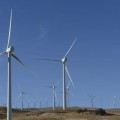
BURLINGTON, Vt. — Vermont’s largest city has a new success to add to its list of socially conscious achievements: 100 percent of its electricity now comes from renewable sources such as wind, water and biomass.
With little fanfare, the Burlington Electric Department crossed the threshold this month with the purchase of the 7.4-megawatt Winooski 1 hydroelectric project on the Winooski River at the city’s edge.
When it did, Burlington joined the Washington Electric Co-operative, which has about 11,000 customers across central and northern Vermont, which reached 100 percent earlier this year.
“It shows that we’re able to do it, and we’re able to do it cost effectively in a way that makes Vermonters really positioned well for the future,” said Christopher Recchia, the commissioner of the Vermont Department of Public Service.
It’s part of a broader movement that includes a statewide goal of getting 90 percent of Vermont’s energy from renewable resources by 2050, including electricity, heating and transportation. Across the state, Vermonters are urging their electric utilities to provide them with renewable sources of power, and the utilities are listening, Recchia said.
It’s also a growing movement across the country, as governments and businesses seek to liberate themselves from using power produced by environmentally harmful fossil fuels.
Diane Moss, the founding director of the Southern California-based Renewables 100 Policy Institute, said that she wasn’t sure if any other communities as large as Burlington — a city of 42,000 — have reached 100 percent, but that many are working on it.
“It’s these front-runners that are showing that it’s possible,” Moss said.
Nearly 1,000 businesses both large and small and many communities have also committed to 100 percent, she said.
Greensburg, Kansas, almost wiped out by a 2007 tornado, rebuilt with energy efficiency in mind. A 12.5-megawatt wind farm went online in 2009, producing electricity in excess of that consumed by the community of 850, said Administrator Ed Truelove.
“We’re trying to be as sustainable a community as we can be,” Truelove said.
For both Burlington and Washington Electric, reaching 100 percent was the result of a years long strategy to wean themselves from traditional sources of power in favor of renewables.
Utility officials in the lakefront city known for its liberal politics and extensive social service network first began discussing becoming 100 percent renewable a decade ago. Four years later they realized it could be done.
“The transition in thought from 2004 to 2008 was ‘We want to do this’ to ‘This actually makes economic sense for us to do this,’” said Ken Nolan, the manager of power resources for Burlington Electric.
http://www.washingtonpost.com/
Neither utility claims that each of their customers’ lights comes from renewable sources all the time. When the wind isn’t blowing and the rivers are low, they will buy power from traditional sources that include electricity generated from fossil fuels.
When the resources are right, though, they get more than they can use, and the difference is sold to other utilities. Over time, they sell more than they buy.
Taylor Ricketts, the director of the Gund Institute for Ecological Economics, an interdisciplinary research center that works on sustainability issues at the University of Vermont, a Burlington Electric customer, said reaching 100 percent was a big achievement.
“It definitely makes me feel better here at UVM to know that every time I turn on a light switch or fire up my computer or anything else, to know that it’s 100 percent renewable,” he said.
NYC to Build Hydroelectric Plant in Upstate Area
DEPOSIT, N.Y. (AP) — New York City says it plans to build a new hydroelectric plant in upstate New York.
Department of Environmental Protection Commissioner Emily Lloyd says the new facility will be built at the city’s Cannonsville Reservoir in Delaware County.
Lloyd says the $72 million 14-megawatt plant will produce enough power for about 6,000 homes and advance the goal of developing affordable, clean and renewable energy.
It also will prevent the emission of 25,620 metric tons of greenhouse gases annually, thereby reducing the city’s overall carbon footprint, and is expected to generate approximately $2 million in revenue each year, depending on demand and the market price of electricity.
Cannonsville Reservoir is the newest among the 19 reservoirs and three lakes that collectively supply New York City with water.






{ 0 comments… add one now }